
From Nice-to-Have to Must-Have: How Aukera Uses Sitemark for Solar Construction Monitoring
How Aukera avoided £100,000 in rework and a 3–4 month delay by catching a pile deviation early with drone monitoring.

About Aukera
Aukera is a renewable energy asset management company with a growing portfolio of solar projects across the UK and Europe. As a project owner and developer, Aukera works closely with EPC contractors, technical advisors, and site managers to deliver solar farms on specification, on time, and within budget — and to maintain those standards throughout every phase of construction.
The Challenge: Catching What Biweekly Visits Miss
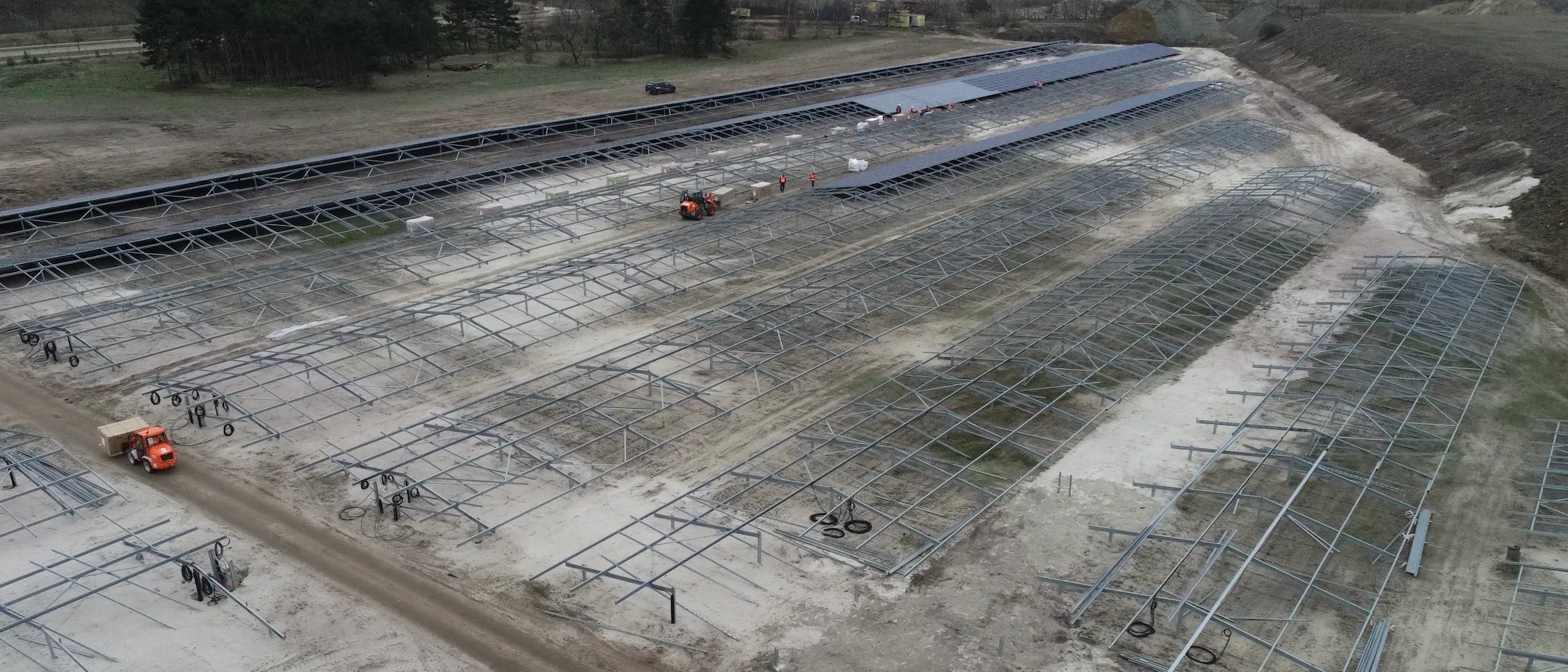
During construction of the Westhouse Solar project — a 63 MWp ground-mount installation — Aukera’s project team identified a troubling pattern: pile heights were drifting from north to south. Left unchecked, the deviation would eventually bring piles into conflict with a site road, creating a serious structural clash and a costly scheduling problem for everyone involved.
The issue wasn’t just technical. It was a visibility problem. Aukera’s traditional approach — relying on site managers and biweekly visits from their technical advisor — simply couldn’t detect emerging defects fast enough. With two-week gaps between check-ins, a deviation like this can quietly compound until rework becomes unavoidable and the cost of fixing it has multiplied.
If we were waiting for two weeks for the guys to be on site, it would have been much, much more than two or three months to fix. With the drones, it was very easy to spot.
— Bruno Loch, Project Manager, Aukera
How Sitemark Flagged the Problem Before It Escalated
Through Sitemark’s drone-based construction monitoring platform, deviations were flagged between two consecutive drone flights — alerting the project team before the issue had a chance to compound.
That early warning changed the course of the project. Aukera’s team was able to review annotated flight imagery, raise tickets, and gather clear photographic evidence — all without dispatching anyone to site. Bruno and his team immediately sent their site representative to investigate and escalate the issue to the EPC contractor, backed by full documentation and ready to act.
No guesswork. No delays. A clear picture of what was happening and exactly what needed to happen next.
What Early Detection Was Worth
With the issue caught early, Aukera estimates rectification will take 2–3 weeks. Had it been identified later — after modules and tables were already installed — the timeline would have looked very different:
- Pile rework alone: 6–8 weeks
- Design review and re-approval with the technical advisor: an additional 1–2 months
- Total estimated delay if caught late: 3–4 months
- Estimated cost of that delay: £50,000–£100,000 in labour and resource alone
Before accounting for lost generation revenue on a 63 MWp asset, that figure alone represents a significant hit to project economics.
In a 63 MWp project, that’s not nice for the contractor and not nice for us. We want the contractor to make money — if they’re happy, our job is easier.
— Bruno Loch, Project Manager, Aukera
This is worth dwelling on for EPC contractors. The deviations weren’t flagged to assign blame — they were surfaced early enough that everyone could course-correct before costs spiralled. Sitemark gave Aukera the evidence to act decisively, but it also gave the EPC contractor a window to fix the problem before it became a programme-defining event. That’s the difference between a recoverable issue and a project crisis.
From Nice-to-Have to Must-Have
Before working with Sitemark, Bruno and the Aukera team treated construction monitoring as an optional add-on — something easy to cut when budgets were tight. One project changed that thinking entirely.
In the beginning we were thinking: is it a nice-to-have or a must-have? You can see here an example where it paid for itself in one case. For a portfolio of five projects, it’s invaluable.
— Bruno Loch, Project Manager, Aukera
Today, Aukera actively recommends Sitemark to all three of their EPC contractors. Bruno also sees a clear opportunity for EPCs to adopt the platform themselves — using it to manage subcontractors more efficiently, raise and track quality tickets, and cut the time spent on manual site walks. For an EPC juggling multiple subcontractors across a large site, that kind of structured oversight can mean catching a deviation early rather than inheriting a delay.
Easy Enough That the Whole Team Uses It
Aukera employs five site managers — many of them seasoned professionals with 20–25 years of construction experience, but not all of them comfortable with new digital tools. Bruno’s experience is unambiguous: Sitemark works for all of them.
Five out of five of our site managers say the platform is easy to use. If those guys are saying it, I believe all contractors will be able to use it.
— Bruno Loch, Project Manager, Aukera
No formal training required. Users can view drone flights, raise and close tickets, and navigate the platform intuitively — Bruno describes it simply as self-explanatory. For EPC teams running fast-moving sites with mixed levels of digital literacy, that kind of accessibility isn’t a small detail. It’s the difference between a tool that gets used and one that doesn’t.
The Recommendation
When asked what advice he’d give a peer at an industry event considering Sitemark, Bruno’s answer is direct:
We are recommending Sitemark to all our contractors. It saves money and it saves time — it did for us.
— Bruno Loch, Project Manager, Aukera