
Pile Height Deviation in Solar Construction: Why It Happens and Why It Matters
Pile height deviation slows solar construction and drives rework. Learn why it happens, why it matters, and how drones detect issues early.
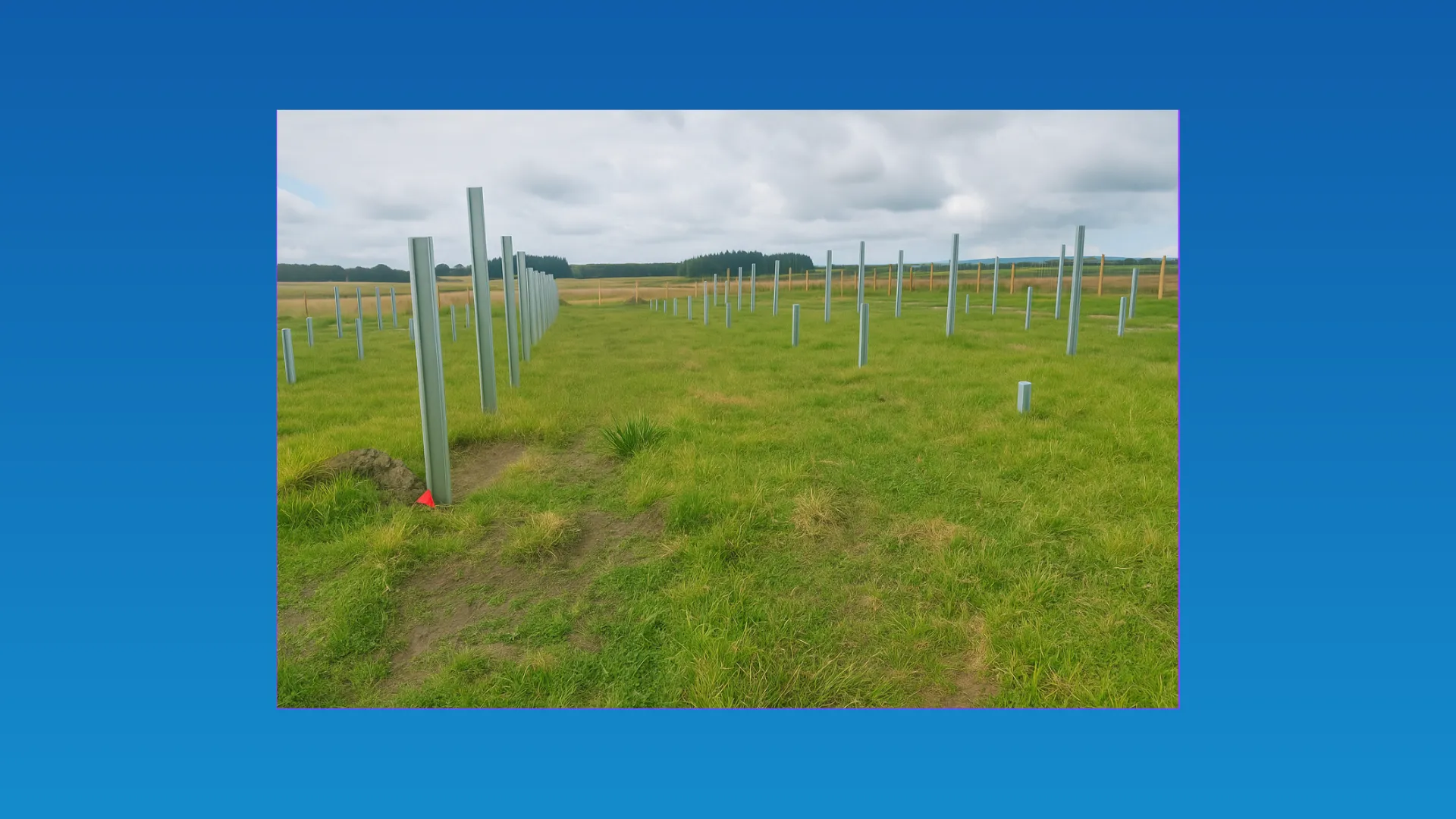
In utility-scale solar construction, one of the most common and costly on-site issues is also one of the simplest: pile height deviation. Piles are the foundation of the mounting structure. If their heights are off by just a few centimeters, downstream installation becomes slower, more expensive, and harder to fix. Despite this, pile height issues are often detected too late, when structures are already scheduled, or worse, partially installed. When this is the case, it’s harder to reach them with the piling equipment, so this isn’t easy to fix.
This article explains why pile height deviation occurs, why it matters, and how drone-based measurement is changing how EPCs detect and manage the problem.
What Is Pile Height Deviation?
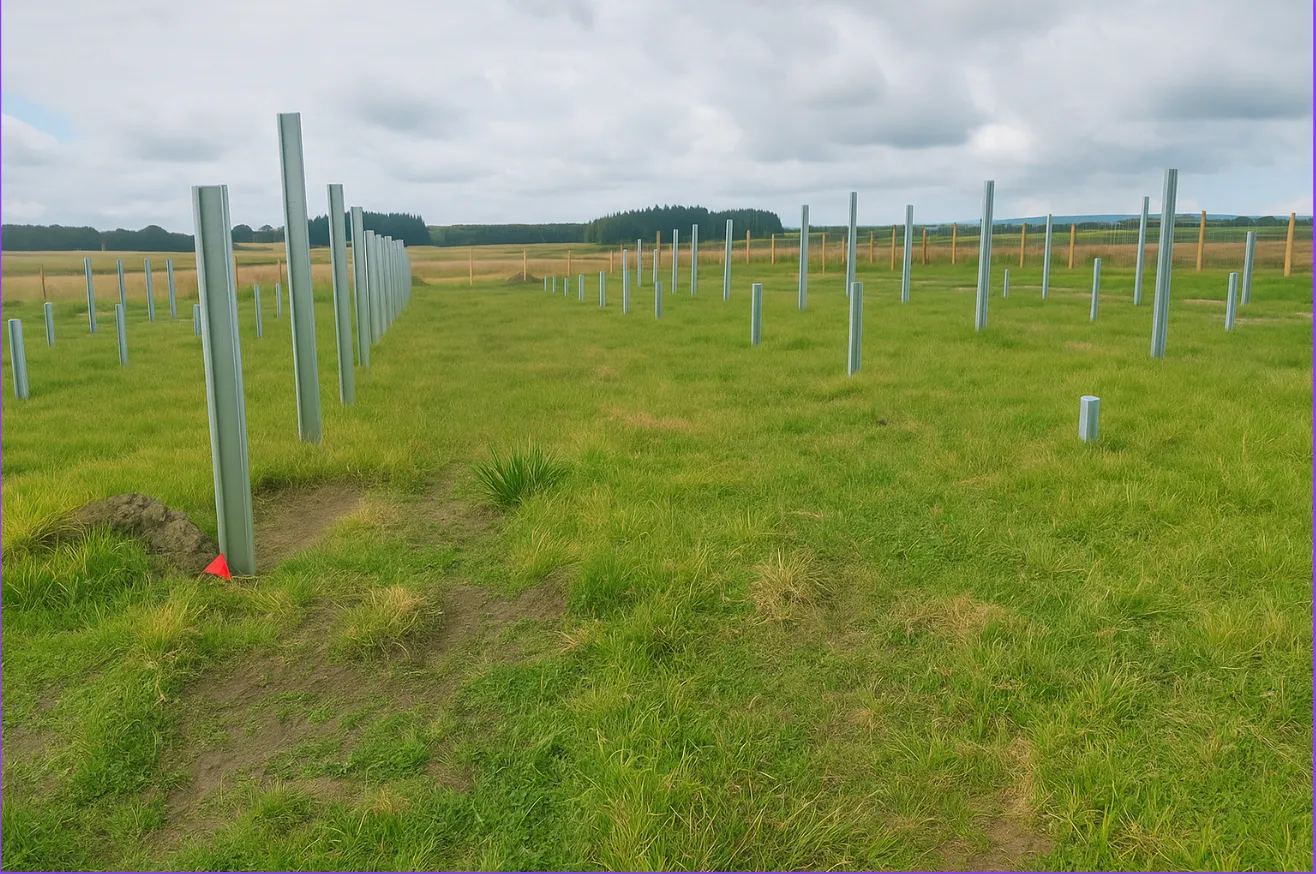
Pile height deviation occurs when driven piles do not meet the required height tolerance above ground or the embedment depth. Even small deviations, as little as 3–4 cm, can cause quality issues during structure installation.
Alignment problems happen when heights are inconsistent. Installing too high might cause structural risks as wind forces increase. Installing too low reduces ground clearance and increases impact from vegetation. Differences in row height increase the likelihood of inter-row shading, which reduces yield.
The result is rework, delays, and increased risk across the construction schedule.
Why Do Pile Height Deviations Happen?
Pile installation happens fast, often under time pressure and in variable ground conditions. Common root causes include:
Rocks and Underground Obstacles
When a pile hits a rock during ramming, it may stop short of the intended depth. From the surface, this isn’t always obvious, but structurally, it’s a problem.
Ground Conditions
Soft soil, uneven terrain, or hidden obstacles can all affect how deep and straight a pile can be driven.
Manufacturing Defects
Not all piles are identical. Minor defects can impair proper driving or cause unexpected height discrepancies after installation.
Equipment Calibration Issues
Incorrectly calibrated piling equipment can apply inconsistent force or depth control, causing systematic height deviations across large sections of the site that go unnoticed for a while.
Operator Inexperience and Time/Budget
Inexperienced operators may struggle to recognize changes in resistance, adjust driving techniques, or identify early signs of misalignment, increasing the likelihood of improper pile installation.
Pile Tilt and Lateral Misalignment
When piles hit rocks or uneven subsurface layers, they may not only stop short but also tilt during ramming. Even small tilts can cause piles to shift sideways, breaking the alignment required within a single table or tracker. While height deviations are easier to spot visually, tilt-related misalignment often goes unnoticed until structure installation begins.
The Real Impact on Solar Construction
Pile height deviation is a significant project risk.
Structure installation delays
To properly mount structures, all piles from a single table or tracker must align precisely. Height deviations — and similarly, pile tilts that cause lateral shifts — prevent components from fitting together, forcing crews to stop, re-measure, and correct piles before installation can continue.
Reduced structural integrity
Piles driven only 40 cm into the ground may not provide enough stability. If piles are too tall, wind forces increase, and they might not withstand them.
Increased rework and costs
Identifying and fixing problematic piles after installation slows everything down.
Design-dependent tolerance risk
Some mounting systems allow larger deviations; others don’t. Without measurement, you don’t know which piles are critical.
In short, small errors early on ripple through the entire construction phase.
Why Manual Pile Checks Don’t Scale
Traditionally, pile height is checked manually, one pile at a time. On sites with tens or hundreds of thousands of piles, this approach has clear limits:
- Time-consuming and labor-intensive
- Prone to human error
- Often limited to spot checks instead of full coverage.
This means many issues remain undetected until crews are already on-site to install structures.
How Drone-Based Pile Height Measurement Works
To address this gap, you can utilize specialized drone flights for solar construction quality control, tailored to specific pile heights. Unlike standard top-down drone surveys, pile height measurement requires oblique imagery and 3D reconstruction.
The Process
Special flight pattern
Drones fly at ~35 m altitude using double-origin oblique flights to capture piles from multiple angles.
High-resolution data capture
Images are collected at a ground sampling distance (GSD) of ~1 cm.
3D model creation
The platform reconstructs each pile in 3D.
Automated measurement
The system identifies the top and bottom of each pile and calculates the height above ground.
Deviation detection
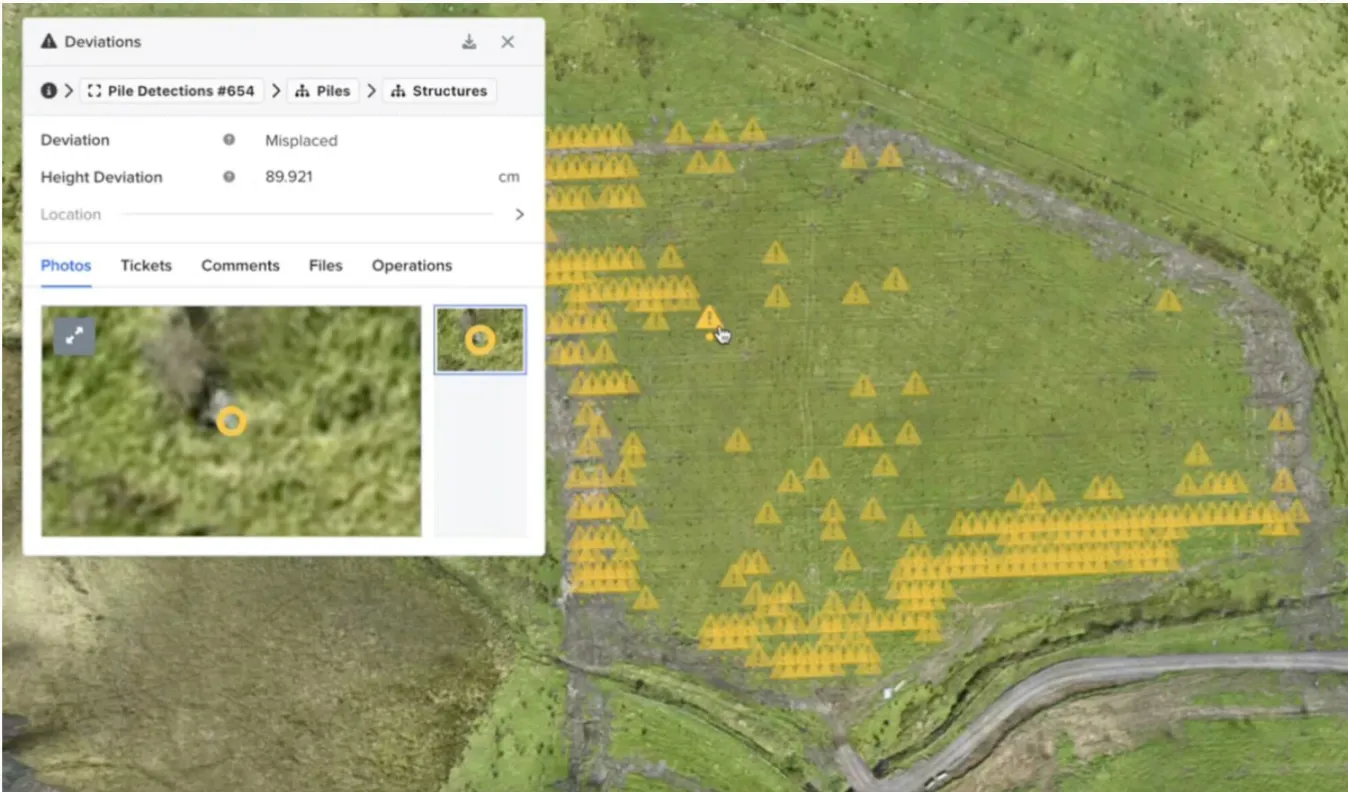
Piles outside customer-defined tolerances are automatically flagged.
Actionable outputs
Deviations are turned into alerts or tickets so teams can act immediately.
Beyond individual pile measurements, the platform understands which piles belong to the same table or tracker. This enables verification of structural alignment, helping teams quickly identify groups of piles that will cause installation issues—even when the problem is misalignment rather than a single outlier.
The Advantages Over Manual Methods
Drone-based pile height measurement delivers clear operational benefits:
- Up to 6× faster than manual checks
- One pilot, one flight, instead of checking piles individually
- Full-site visibility, not just samples
- Consistent, repeatable measurements with reduced human error
This enables early identification of systemic issues before they disrupt installation.
Why This Matters to the Industry
Pile height deviation is consistently cited by EPCs as one of the biggest pain points in solar construction—and one of the strongest use cases for drone-based monitoring.
The reason is simple:
Catching pile issues early is far cheaper than fixing them late.
As solar projects scale in size and complexity, manual quality control cannot keep pace. Data-driven, site-wide visibility is becoming a necessity, not a nice-to-have.
Final Thoughts
Pile height deviation may seem like a small detail—but in solar construction, small deviations have big consequences.
By integrating specialized drone flights with automated 3D analysis, teams can transition from reactive firefighting to proactive construction quality management—addressing issues before they hinder progress.
If you’re building at scale, knowing your pile heights early might be one of the simplest ways to protect your schedule, budget, and build quality.
Control Pile Height Before It Delays Construction
Identify pile height and alignment issues early across your entire site—before structure installation begins. Using drone-based measurement and automated deviation detection, teams can respond more quickly, minimize rework, and stay on schedule.
👉 See how Sitemark helps you catch pile issues before they become costly delays